
You’ve seen the prices — half of Western brands. But you’ve also heard the horror stories: machines that arrive smashed, suppliers that vanish, warranties that are worthless. Below is the exact framework I’ve used after 9+ years inside China’s squash ball machine industry (formerly at SIBOASI factory, now founder of VEKEDA SPORTS).
🔍 The 7-Step Verification Framework (2026 Edition)
1️⃣ Step 1: Legal deep-dive – beyond basic NECIPS lookup
Every legitimate Chinese company must be in the National Enterprise Credit Information Publicity System (NECIPS). But in 2026, you need to check three extra items:
- “Abnormal Operations List” (经营异常名录) – If the company has been flagged for “failing to file annual reports” or “unreachable at registered address”, stop negotiations.
- Business scope – Must explicitly include “sports equipment manufacturing” or “import/export”.
- Registered capital paid-up status – Not just authorised capital. Real suppliers have paid-in capital.
2️⃣ Step 2: Cross‑platform identity check (Google + LinkedIn + FB/YT/TikTok)
Type the company name, brand name, phone number and address into Google. Everything must match. Then scan professional networks:
- LinkedIn – Company page with real employees, history, and engagement.
- YouTube – Factory walkthroughs, squash machine demos, maintenance videos.
- Facebook/Instagram/TikTok – Visual proof of operations and customer interaction.
A trustworthy supplier invests in squash‑specific content – not just product pages. Browse their blog, resource section, and video library.
- ✅ Dozens of articles about drills, maintenance, ball machine comparisons.
- ✅ YouTube tutorials explaining how to fix jamming or use programmable points.
- ✅ Detailed specs, manuals, and case studies.
4️⃣ Step 4: LIVE video inspection – the AI‑proof verification
AI can generate perfect factory photos, but it cannot respond to your live commands. Demand a real‑time WhatsApp / Zoom / WeChat tour.
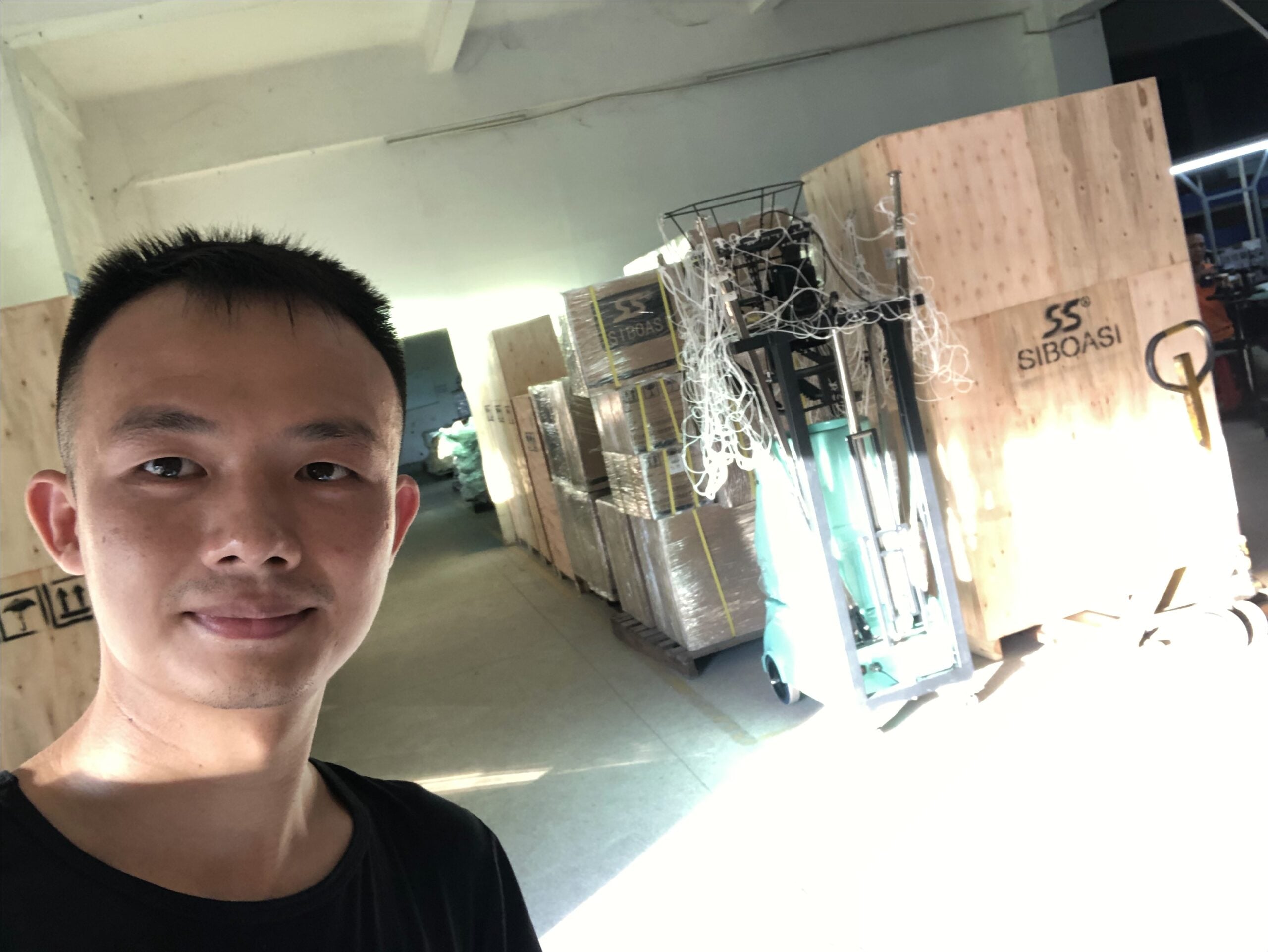
📸 Real factory inspection: William Liu on a live video call with a client, verifying machine components in real time.
If the supplier hesitates or makes excuses, they likely have no physical inventory or are a pure trader.
After NECIPS verification, ask for their official bank account details for the wire transfer.
❌ If the account is under a personal name or a shell “XXX Trading HK”, they likely avoid taxes or lack independent import/export rights. High risk of zero after‑sales support.
6️⃣ Step 6: Real 2026 pricing & the “TEMU trap”
A legitimate 80‑ball, heated, programmable squash machine (35 points, 12 modes, 360W motor, 12V/32AH lithium battery) cannot cost $800. Due to 2026 lithium battery regulations (UN38.3), steel tariffs, and logistics, the realistic B2B price is $1,600–$2,000.
Ask for MSDS and UN38.3 test reports – a legit supplier provides them without hesitation.
7️⃣ Step 7: Request real references + visual proof
Ask for 2–3 recent buyers (ideally in your region). Request a quick video call with them or a recorded testimonial showing the machine running.
- ✅ Customer name / company appears on LinkedIn or Google
- ✅ Video testimonial (harder to fake than text)
- ✅ Shipping documents (blurred prices, but visible dates and weights)
📊 Supplier Reliability Score (Check & Calculate)
📋 At a glance: Safe supplier vs. High‑risk supplier
| Criteria | ✅ Safe (2026 verified) | ❌ Unsafe / Trader |
|---|---|---|
| NECIPS record | Active, no abnormal flags, correct scope | Not found / inactive / wrong business scope |
| Bank account name | Matches NECIPS company name | Personal name or offshore trading shell |
| Online presence | LinkedIn, YouTube, FB, blog with squash content | Almost no footprint or inconsistent info |
| Live inspection | Accepts real-time WhatsApp/Zoom tour | Excuses, pre-recorded clips only |
| Warranty & docs | 2-year warranty, MSDS, UN38.3 available | “We will handle after payment” / no docs |
| Price (heated 80‑ball unit) | $1,600 – $2,000 USD | Below $1,200 (likely missing heater/battery safety) |
• NECIPS official portal (China enterprise credit)
• UN38.3 lithium battery safety (SGS)
• WTO rules of origin – supplier compliance
🎯 Inside secret: 2026 logistics & lithium battery regulations
Since 2025, international shipping of devices with large lithium batteries (12V/32AH) requires strict UN38.3 testing and Class 9 dangerous goods declarations. Cheap suppliers often skip these certifications, leading to customs seizure, shipping delays, or fire hazards. A legitimate supplier provides MSDS and UN38.3 reports upfront – ask for them.
“I’ve seen too many buyers chase a $200 discount and end up with a useless machine. Use the 7‑step framework, always do a live video check, and verify the bank account name. The extra 2 hours of research will save you 6 months of frustration.”
Ready to source with confidence? Start with the NECIPS database, then move through each step. If a supplier passes all 7 gates (like VEKEDA), you’ve found a reliable partner.
📧 Need help verifying a supplier? Contact our team →